Acetate Accessory RFQs: Separate the Material Scope
For an acetate accessory enquiry, ask the manufacturer to associate each material statement with an exact offered product and the physical parts it covers. Keep that scope with an identified document, sample and quotation version. A category name or a recognisable product photograph can identify the enquiry, but it does not independently establish the composition of every visible part.
Official homepage product-category reference. The pictured objects do not verify acetate or PMMA chemistry, shared components, a supplied set or a manufacturing process.
Begin with the actual flower-claw offer
Yongqi’s product listing names an Acetate flower claw clip. Its homepage also introduces hair-accessory and PMMA mirror categories. Keep those product references separate when asking for a material declaration. A manufacturer reply should identify the actual flower-claw offer or another specifically identified item, rather than leaving a category-level term to describe every object shown in a group photograph.
Ask the supplier which commercial product identifier and version its statement covers. If it uses a product name without a separate code, retain the name and the additional reference it provides. Keep any alternative on its own record. The purpose is to connect the supplier’s wording to the item being quoted, without transferring a material description from a mirror category to a hair clip or between different accessory appearances.
Ask which physical parts the declaration covers
Ask the manufacturer to identify the parts or regions included in its declaration for the actual offered clip. Its own product or component reference can distinguish the body, decorative areas and any other parts it treats separately. Use the manufacturer’s terminology, particularly where a decorative appearance does not show whether an area is part of one body or another separately identified component.
The flower-decorated product photograph provides a way to recognise the offered appearance. It does not establish the chemistry of the flowers, the body or any hardware. Ask the supplier to state the actual scope of its material wording. A declaration covering one identified part should remain attached to that part until the manufacturer confirms whether the same statement applies elsewhere in the offered item.
Official flower claw clip product image. The visible decoration is an appearance reference, not a verified flower count, component material or attachment specification.
Keep appearance and material wording distinct
A colour, a translucent-looking area or a metal-coloured feature is an appearance reference. It should not be turned into a material grade or a composition statement without the manufacturer’s applicable information. Ask the supplier what material wording it provides for the part being discussed, together with the product and version to which that wording applies.
The term acetate in the product name can stay visible as the supplier’s listing description while the exact declaration is requested. Do not fill in a chemical formulation, percentage, purity or grade that the supplier has not supplied. If the manufacturer uses a broad material-family term, retain that actual scope and ask any further product-specific question directly. A photograph cannot supply the missing declaration details.
Buying field
Requested supplier response
Offered item
The exact flower-claw product or separately identified accessory under quotation.
Physical scope
Manufacturer-named part or region covered by the statement.
Material wording
The declaration or specification wording actually supplied for that scope.
Document identity
Available manufacturer record and its applicable version or revision.
Sample correspondence
The identified sample or offered version represented by the statement.
Remaining question
Any product or component applicability still awaiting a manufacturer reply.
Keep the mirror category on a separate record
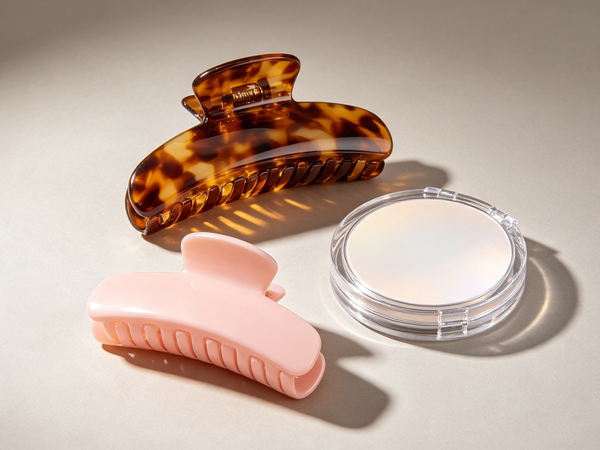
The homepage’s PMMA mirror wording belongs to a distinct category discussion. The round mirror-style object and plain claw clips pictured in the homepage group are category appearance references. They do not establish that those objects share a material, are offered as a set or use the same construction as the flower-decorated claw clip.
If a mirror or another accessory is included in the commercial enquiry, give it its own supplier product reference and applicable declaration. Ask which physical part the manufacturer means when it uses its material terminology for that item. Keep the reply with that offer. This prevents a single category label from becoming an unsupported statement about a reflective area, a housing or a different accessory photographed nearby.
Request the available manufacturer record
Ask what material statement, product specification or component record the manufacturer can provide for the actual offered item. Retain the document identifier and the version the supplier says is current. If the reply is a written statement within the quotation correspondence, keep the product reference and the parts covered with that statement so that its applicability remains clear.
Do not treat a general company description as the completed product declaration. Likewise, a product-category photograph is not a record of a manufacturing operation or a material result. Ask the supplier to identify the information it actually offers and the item it describes. Keep unanswered composition or component-scope fields as direct purchasing questions rather than replacing them with assumptions about the appearance.
Official homepage category image. This clip and the background mirror or comb are separate appearance references; shared hinge parts or a supplied accessory set are not confirmed.
Connect the statement to the sample and quotation
When a sample is offered, ask the manufacturer which declaration or product record applies to it. Keep the sample reference, commercial product identifier and document version together. If a supplier introduces another decorative version or a component alternative, ask whether the existing material wording still covers the proposal. Retain any revised applicability statement with the updated offer.
A buying team should be able to tell which offered product a document describes and which physical parts it includes. Where the association is unclear, ask the supplier to clarify it before using the wording for that product discussion. This is an identity and scope record. It does not independently verify a material, a manufacturing process or a performance result for the sample.
Retain the current scope through changes
Keep the manufacturer’s actual material wording and its component applicability with the current quotation. If the supplier updates a document or an offered part, ask which earlier reference is replaced and what changes. Keep the answer visible to the people reviewing the sample and the people maintaining the product description, so that an old statement is not silently carried into a new offer.
The resulting record separates the product name, category terminology and the declaration actually supplied for the offered parts. It supports a clearer flower-claw sourcing discussion without claiming that pictured colours prove composition, that a PMMA mirror description applies to a clip, or that a factory process, grade, spare-part availability or supplied accessory set has been established by the photographs.
Buyer FAQ
Does the product name establish the composition of every part?
Request the manufacturer’s actual product and component scope. Keep any statement limited to the parts and version it identifies.
Can a metal-coloured hinge be assigned a material grade from its photograph?
No grade should be inferred from appearance. Ask for the manufacturer’s applicable part declaration or specification.
Can the PMMA mirror category describe a flower claw clip?
Keep separate product categories and offers on their own records unless the supplier provides an explicit applicable statement.
What belongs with the material reply?
Retain the exact offered item, parts covered, manufacturer wording, document version and sample or quotation correspondence.
Use the flower claw clip product reference, keep the homepage accessory categories separately identified, and request the manufacturer’s applicable material declaration.
Identify the exact accessory offered under quotation.
Associate each supplier material statement with the physical parts it covers.
Keep the current document, sample and quotation correspondence together.
wholesale acetate flower claw clipB2B supplier sample record